
- Services
- Industries
- Resources
- About
- Contact us
- Training Courses
Popular courses

- Home
- Insights
Expert advice from industry leaders
Gain valuable guidance and expertise from experienced development leaders through our curated collection of industry insights and advice.

FEATURED
AI is moving fast: most organisations aren’t
The gap between deploying AI and actually using it is wider than most leadership teams think.
Ninety-two per cent of organisations are experimenting with the technology, but only 25 per cent are turning that into measurable business value, according to the ROAI Institute. The difference is increasingly not about tools.
Many leadership teams believe they are already advanced in artificial intelligence. In reality, most remain in early stages of maturity, where copilots, chatbots and analytics tools are deployed in isolation rather than embedded into core workflows and decision-making.
Thursday, 09 December 2021
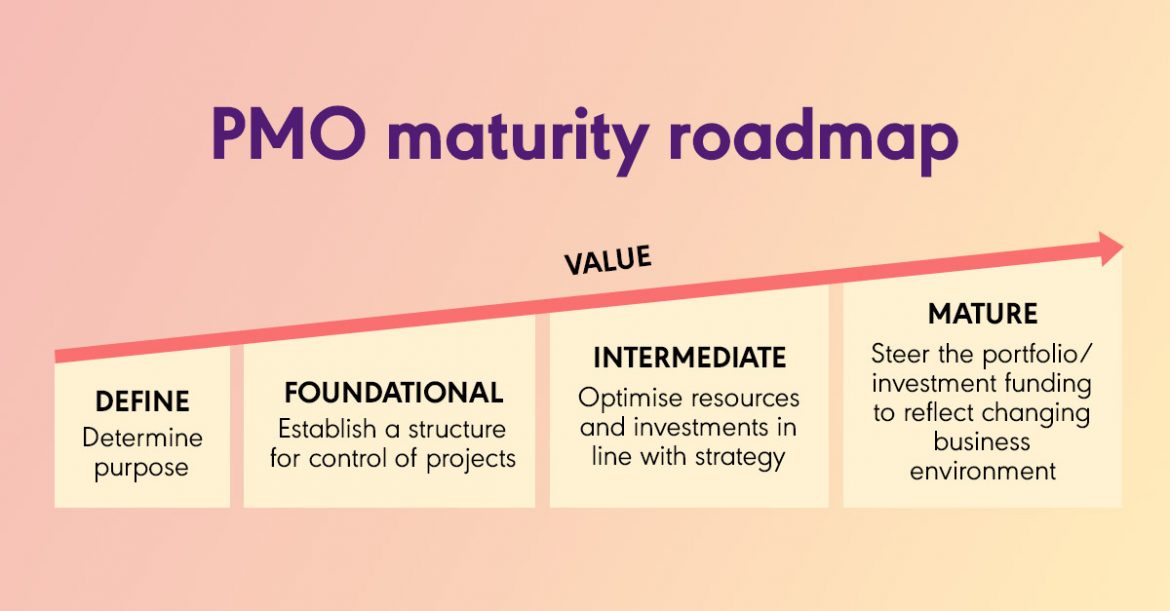
PMO maturity: Mapping a journey from cost centre to strategic asset
As project management offices mature, they move from a bureaucratic cost centre to a value-driven asset. Embarking on a PMO maturity journey can unlock the value of your PMO and drive it towards a more supportive, strategic role.

Friday, 26 November 2021
What is a project centre of excellence and why do you need one?
For many project-led or project-focused organisations, the project management office is synonymous with a centre of excellence (CoE). In reality, however, some organisations set up a standalone centre of excellence rather than having a full-service PMO, and some set up the CoE as a separate function to the PMO. Here we unravel what a CoE
Friday, 19 November 2021
How to make project management tools work for you
With the shift to hybrid work and digital disruption gathering pace, now’s the time for savvy project and programme managers to harness the potential of project management tools to elevate their projects – or risk being left behind.
Friday, 12 November 2021
3 essential soft skills for project managers
As more organisations embrace new ways of working to solve problems, project managers need a suitcase of soft skills to swiftly pivot, drive change and maintain momentum. Arm yourself for the future and make sure your resume has these top three soft skills for project management success.
Thursday, 28 October 2021
Which project delivery framework is right for your organisation?
The number of organisations taking a hybrid approach to managing and delivering projects has increased. Here’s why customising your project management framework to reflect this will better support project success.
Thursday, 14 October 2021
Helping employees deal with change in the workplace
Unpredictability and flux may be the new status quo but there is plenty leaders can do when it comes to helping employees deal with change in the workplace. Taking steps to address the psychological safety of your employees at every stage of the change process is a good place to start.
Friday, 08 October 2021
11 reasons why organisational change fails
60-70% of organisational change projects fail. Various studies show that this failure rate has stayed constant from the 1970s to the present day. Why is this? Here are our 11 most common failings – avoiding them is first step to improving your odds of success.
Friday, 01 October 2021
Why you need a post implementation review for your project
A notable reason for ongoing project failure is the absence of conudcting a post implementation review (PIR). But what is a PIR, and how can an organisation use this opportunity for analysis and reflection to boost the likelihood of future project success?
Wednesday, 15 September 2021
How to write a business case: 20 point checklist
No organisation has the resources to fund every project. It’s therefore safe to say that when decision makers are reviewing your business case they’ll most likely be looking for a reason to say ‘no’. This is why an effective business case is about more than simply listing the costs and benefits of a project. As far as possible it needs to be watertight. When writing a business case, use our comprehensive checklist and prove your project is worth the investment.
Saturday, 04 September 2021
The role of local council in crisis management
In an ideal world, local council would spend most of their time managing day-to-day community priorities. Unfortunately, the rising frequency of impactful emergencies – droughts, fires, storms, coastal erosion and the COVID-19 pandemic – means councils must be able to react to new crises at a moment’s notice. Near-perpetual crisis management means business-as-usual has fallen